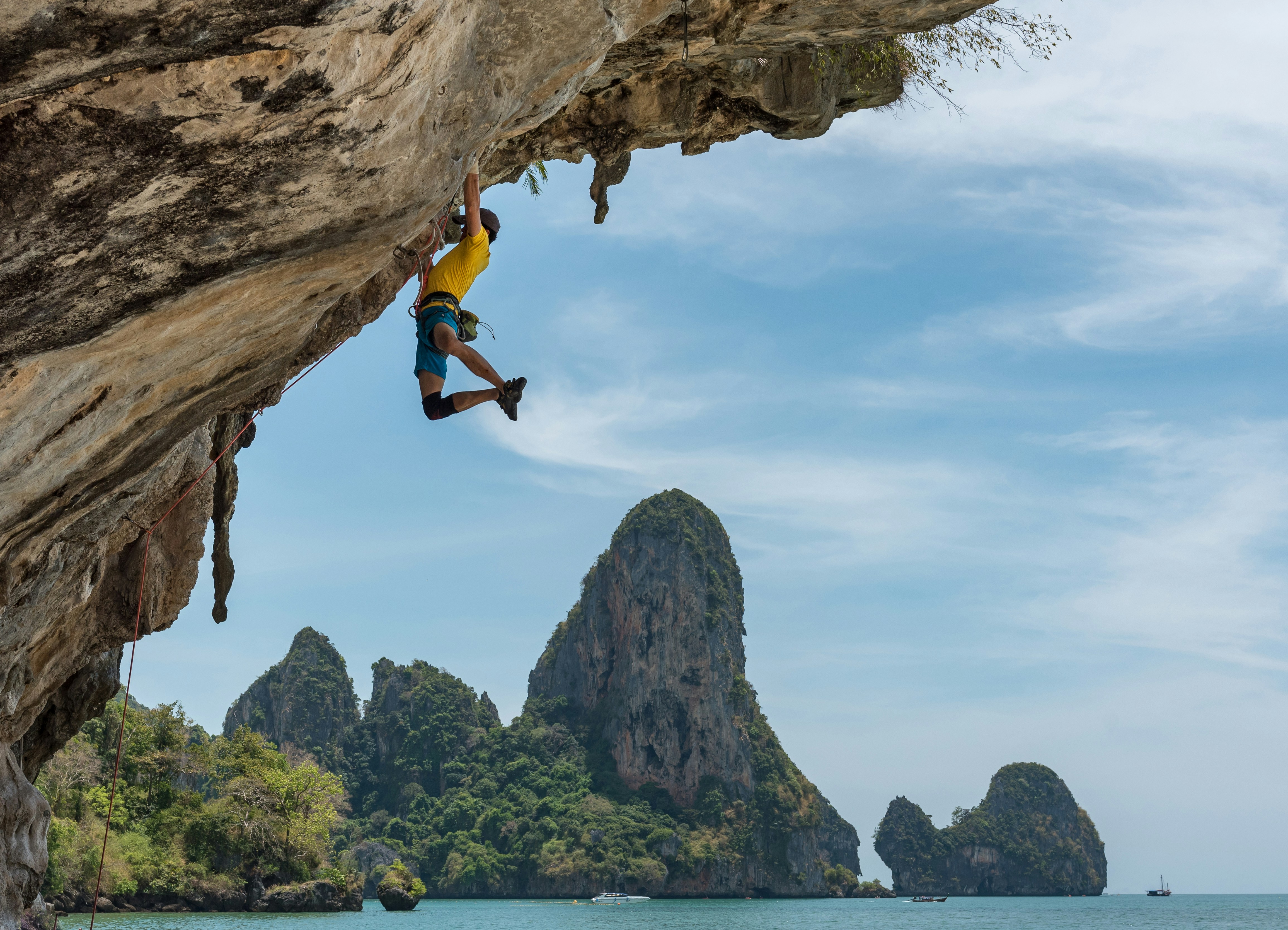
Summer is when the bikes come off the rack, the trailheads get busy, the surf boards come out of the garage, and the version of you that spent winter hunched over a laptop suddenly wants to climb something, ride something, or paddle into something.
Cycling, hiking, climbing, surfing — these put a real physiological demand on your body. Enthusiasm gets you to the trailhead. It’s not what gets you through the climb, or lets you walk normally the next day.
If you want the adventure without paying for it for three days afterward, your body needs support, not just motivation.
Heat Adaptation: Your Body Is Working Before You Even Start Moving
The temperature outside impacts your exercise performance. Exercising in hot conditions produces significantly higher cortisol, cardiovascular strain, and stress-hormone output than the exact same effort in cooler temperatures — your heart rate climbs, blood is redirected to the skin for cooling, and your core is working overtime just to keep you upright.
The single biggest lever here is heat acclimatization: repeated heat-exposed exercise over one to two weeks measurably lowers core temperature, increases sweat efficiency, and reduces cardiovascular strain. Heat illness risk is highest during the first hot days of the season — before your body has had the chance to adapt. That first triple-digit trail day in early July is metabolically riskier than the exact same hike in August, once your body has caught up.
Sweat isn’t just water loss — it’s mineral loss. You’re losing up to a gram of sodium per liter of sweat, plus potassium, calcium, and magnesium, and those losses compound across a multi-day adventure block. Even a modest fluid deficit — just two percent of body weight — is enough to measurably impair endurance performance.
HPA Axis and Adrenal Support: Cortisol Doesn’t Know the Difference Between a Climb and a Deadline
This is the part that matters most for a nervous system that’s already been asked to perform high for the past six months.
Heat and exertion are additive stressors on the HPA axis — they stack, they don’t cancel out. Cortisol rises progressively with thermal strain, regardless of fitness level. A well-trained athlete and a weekend warrior both get the cortisol spike from just heat.
Here’s where it gets specific: dehydration doesn’t just slow you down — it amplifies the cortisol response. Research shows plasma cortisol rises significantly higher during exercise in the heat when fluid intake is restricted, and the more body mass lost to sweat, the sharper the cortisol spike. In other words, staying hydrated isn’t just a performance strategy. It’s a direct lever on how hard your stress response gets pulled.
There’s also a training-type distinction worth knowing: regular endurance training tends to raise baseline cortisol over time, while high-intensity interval training tends to lower it. If your weekend adventures are long and steady — a full-day hike, a long ride — your baseline stress load may be quietly climbing even as your fitness improves. That’s exactly why recovery has to be programmed in.
The takeaway: staying heat-acclimatized and staying hydrated are the two most evidence-backed ways to blunt the cortisol surge from summer exertion. That’s the difference between steady, sustained energy and a spike-and-crash pattern that leaves you wrecked.
Sleep: Where the Adventure Actually Pays Off
Longer daylight hours are quietly working against you. Even ordinary indoor evening light can delay your body clock by up to ninety minutes, pushing melatonin — and your whole sleep window — later. Combine that with an evening ride or a post-work climb, and you’re compounding the delay: exercise after seven in the evening phase-delays your body clock, while morning or early-afternoon movement phase-advances it, helping you fall asleep earlier.
This isn’t a minor scheduling detail. Sleep is the window where the actual adaptation happens — slow-wave sleep drives the growth hormone release and repair signaling your muscles need after a hard effort. Cut the sleep short, and cortisol rises while testosterone and growth hormone — your two main recovery hormones — both drop.
Fueling the Machine: Mitochondria and Blood Sugar
Endurance activity is a mitochondrial demand. B vitamins and magnesium are direct cofactors in the energy production pathway — deficiency in either measurably reduces endurance capacity and increases the oxygen cost of the same effort. CoQ10 plays a similar role in the mitochondrial electron transport chain, and supplementation has been shown to improve the efficiency of that process in active adults.
On blood sugar: the mid-hike “bonk” is glycogen depletion. For anything over about an hour of sustained effort, thirty to sixty grams of carbohydrate per hour keeps blood glucose — and your energy — from cratering. Pairing that carbohydrate with a little protein or fat slows the absorption curve, which means a steadier ride instead of a sugar-fueled rollercoaster.
Hydration Beyond “Just Drink Water”
Pre-hydrating matters as much as hydrating during. The general guidance is roughly five to seven milliliters per kilogram of body weight, with sodium included, about four hours before you head out — sodium is what actually helps your body hold onto the fluid instead of losing it right back out. Sweat rates during activity can range enormously, from under half a liter to well over two liters an hour, depending on heat, intensity, and individual variation.
Worth knowing for climbers and hikers specifically: adequate hydration supports joint health. Synovial fluid — the lubricant that cushions your joints — depends on proper fluid balance, and maintaining electrolyte-forward hydration is one more reason to take pre-loading seriously when the activity is high-impact.
Recovery Isn’t the Boring Part — It’s Part of the Adventure
If you’re packing your outdoor time into two days a week around a full-time job, recovery has to work as hard as your training does.
The evidence is fairly clear on what actually moves the needle: massage ranks highest for reducing soreness and perceived fatigue, with cold-water immersion (ten to fifteen degrees Celsius, five to fifteen minutes) improves muscle recovery and muscle damage markers.
The takeaway: recovery isn’t what you do after the fun ends. It’s what lets you do it again next weekend without starting from zero.
The Bottom Line
The difference between an adventure that fuels you and one that flattens you isn’t willpower. It’s whether your heat response, your HPA axis, your sleep, and your recovery are actually built to support the life you’re trying to live.
What are you doing today to build your capacity?
This is the perfect time to take a moment to schedule your Mid-Year Health Reset to look at your real capacity before you build your fall strategy. For those who are ready, you can schedule that appointment here.